Low back pain refers to pain that occurs in the lower back (lumbar region) of the torso. It is estimated that 80% of people experience at least one episode of significant low back pain during their lifetime, and that 50% of workers experience low back pain annually. When low back pain is present, it interferes with nearly all daily activities and causes significant discomfort.
What does the structure of the lower back look like?
The causes of low back pain are very diverse, ranging from trauma to degenerative changes. To better understand low back pain, it is helpful to understand the structure of the lower back.
The lower back consists of lumbar vertebrae, intervertebral discs, the spinal cord, and nerve branches that extend from it. It serves to connect the upper and lower body.
Lumbar Vertebrae: Composed of 5 lumbar bones stacked on top of each other, they connect the thoracic spine (upper back) above to the sacrum (pelvis) below.
Intervertebral Discs: Located between the 5 lumbar vertebrae, these act as shock-absorbing cushions that provide stability.
Nerves: Located inside the spinal canal at the center of the lumbar spine, these tissues act like 'electrical cables' that connect the brain to the leg muscles. At each lumbar vertebral level, nerve branches extend to the left and right. These nerve branches are called nerve roots.
Facet Joints: These joints allow movement of the lumbar vertebrae while also providing stability between the vertebrae.
Muscles and Ligaments: These provide the strength and power needed for lower back movement, support the lumbar vertebrae, and provide stability to the lower back.
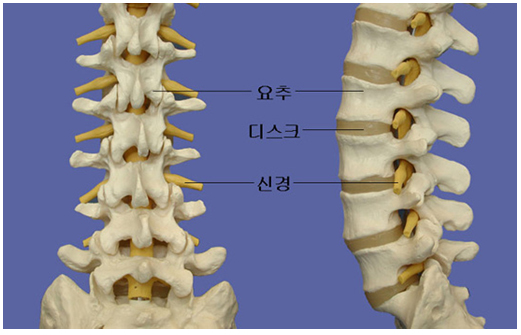
Figure 1: Structure of the Lumbar Spine
What are the causes of low back pain?
Lumbar Strain: This is the most common cause of low back pain, commonly referred to as a 'pulled back' or 'wrenched back.' Overuse or injury can cause damage to the muscles or ligaments of the lower back, resulting in pain. Most cases recover to normal within 2-3 weeks with conservative treatment, though rarely the condition may become chronic or recur.
Disc Herniation: A lumbar disc is not the name of a disease, but rather the anatomical name for a disc-shaped structure that absorbs shock between lumbar vertebrae. The disc is composed of a soft, gel-like center (nucleus pulposus) and a tough, fibrous outer layer (annulus fibrosus) that surrounds it. In children and young adults, the nucleus pulposus is very soft and gel-like. As people age into middle age, the nucleus pulposus loses its elasticity and the annulus fibrosus may develop cracks or gaps, which can lead to low back pain. As these gaps in the annulus fibrosus gradually enlarge, the nucleus pulposus can bulge out or rupture. When the ruptured nucleus pulposus presses on a nerve, this is called disc herniation. When the escaped nucleus pulposus presses on a nerve, pain or numbness may occur in the area supplied by that nerve (buttocks, legs, feet).
Aging: Aging causes degenerative changes in discs and arthritis in the facet joints of the lower back. While degenerative changes develop in everyone as they age, most cases involve little to no pain. Since these changes are part of the natural aging process, they cannot be completely prevented. However, the progression can be slowed through regular exercise, proper posture and lifestyle habits, adequate nutrition, and smoking cessation.
Spinal Stenosis: The aging process of lumbar vertebrae and ligaments can cause bone overgrowth or ligament thickening. When this narrows the spinal canal (the path through which nerves pass), the nerves become compressed. This condition is called spinal stenosis or lumbar spinal stenosis. Patients with stenosis often complain that walking is more difficult than back pain. A characteristic feature is that pain or numbness in the areas supplied by the compressed nerve worsens the more they walk.
Osteoporosis and Fractures: Bone naturally becomes weaker with age, and especially in women after menopause, bone becomes very weak. This severe weakening of bone is called osteoporosis. Weak lumbar vertebrae can become crushed or fractured from falls, lifting pressure, or even minor trauma from everyday activities, causing lower back pain.
Infection/Tumor: Although rare, inflammation, commonly called osteomyelitis, can infect the spine and its bone marrow or cause disc inflammation, resulting in pain. On the other hand, tumors originating in the spine itself or cancers that have spread to the spine from other organs can also cause fractures or invade surrounding tissues, resulting in low back pain. Other Factors: Pregnancy, kidney/urinary stones, endometriosis, fibromyalgia, and physical/psychological stress can also cause low back pain.
How is low back pain diagnosed?
Most low back pain is not serious and responds well to relatively simple treatment. Your orthopedic spine specialist will ask whether you have had any injuries and what the pain is like. You may also receive a physical examination of your back and legs. In most cases, expensive tests are not necessary for initial diagnosis and treatment of low back pain.
However, if the pain is severe, has not responded to treatment for a long time, or there is shooting pain in the legs (radiculopathy), additional imaging studies may be needed. X-rays can show some signs of arthritis or bone abnormalities, but cannot visualize soft tissues such as discs or nerves. Therefore, CT or MRI scans may be necessary. Sometimes a bone scan may be needed to detect bone abnormalities, or electromyography (EMG) may be used to evaluate nerve function.
However, the presence of abnormalities on X-ray, MRI, or CT does not necessarily mean these findings are the cause of your low back pain. In fact, studies show that 90% of all patients who undergo MRI have some type of abnormality, and such findings are quite common even in people without low back pain. Therefore, the cause of low back pain is determined not solely by imaging studies, but rather by a comprehensive review of the patient's medical history and physical examination findings.
Does low back pain always require surgery?
Most low back pain can be treated safely and effectively with rest over a period of time, physical therapy, medications, and nerve blocks. While short-term rest may be helpful, most research shows that beginning light activity promptly accelerates healing and recovery. Therefore, rather than stopping all activities including your usual work, follow the guidance of an orthopedic spine specialist to adjust your daily activities. Once the initial pain subsides, stretching and exercises to strengthen the back and abdominal muscles can be helpful. If you are overweight, losing weight is beneficial, and if you smoke, quitting will help with low back pain treatment. The best long-term treatment is to actively prevent back injury by maintaining good health habits, using proper techniques when lifting objects, and maintaining good posture. Whether acute or chronic, most low back pain is treated without surgery. However, if these non-surgical methods do not help, surgery may be necessary.
How is non-surgical treatment performed?
1) Heat or Cold Therapy
Applying heat or cold to the affected area does not treat the underlying cause of low back pain, but it can help relieve the patient's pain. Heat dilates blood vessels, improves blood circulation to the affected area, relieves muscle spasms, and also changes pain sensation. Cold, on the other hand, constricts blood vessels, reduces inflammation in the affected area, and numbs sensation to relieve pain.
2) Exercise Therapy
Exercise therapy helps even with acute low back pain. Rather than lying still because it hurts, people who move within the range their doctor or therapist advises and begin light exercise early are reported to recover faster and have less difficulty with daily activities. For chronic low back pain, exercise is also known to reduce pain and lower the chance of recurrence. That said, exercise can worsen symptoms or strain the lower back in some people, so it is essential to consult your doctor and have exercises prescribed that suit you.
The following are types of exercises used to treat low back pain
- Extension Exercises
Extension exercises involve backward bending of the lower back and can help reduce radiating pain (pain felt in an area different from where the pain originates). An example of an extension exercise is lifting the upper body and legs while in a prone position.
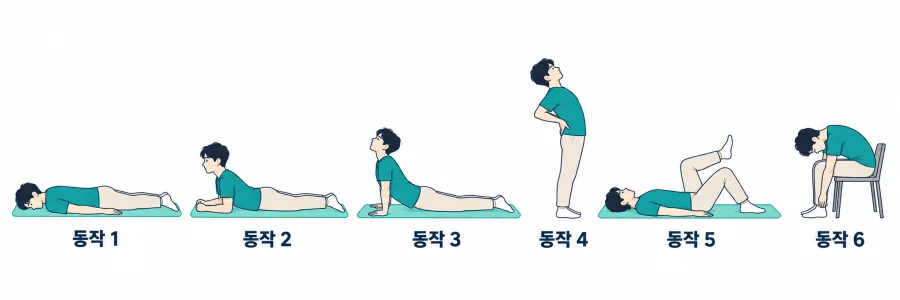 ▶ SpineTube | Watch lower back stretching exercises ↗
- Flexion Exercises
Flexion exercises involve bending the trunk forward. They help widen the space between the vertebrae, reducing nerve compression, stretching the muscles of the back and buttocks, and strengthening the abdominal and gluteal muscles. Strengthening the abdominal muscles is particularly known to reduce the burden on the spine. However, if you are in the acute phase of a sudden disc herniation, or if bending forward makes your leg numb and painful, flexion exercises can make symptoms worse and should be avoided. These days extension or core exercises are usually recommended first, and flexion exercises are started after the pain has settled down somewhat, in consultation with your doctor or therapist.
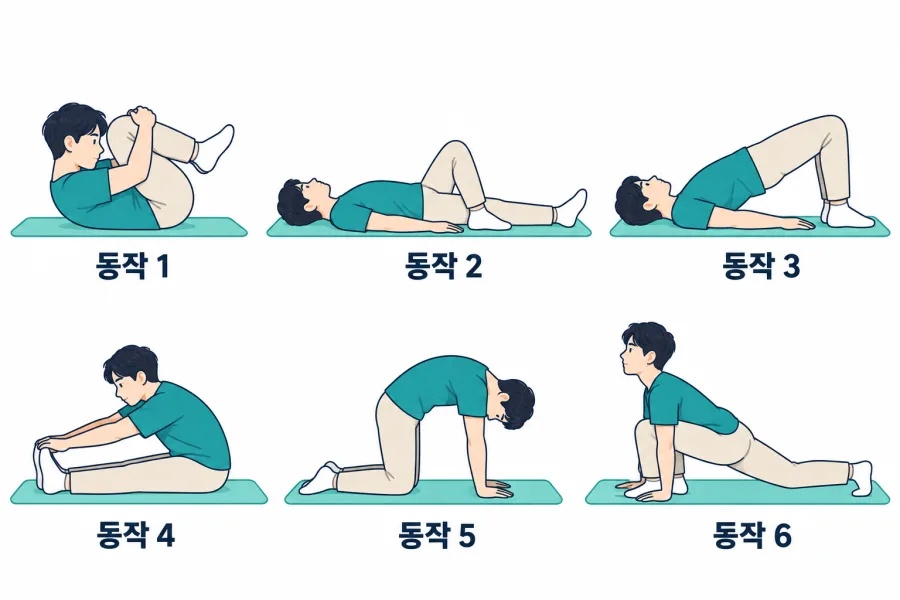
- Core Stabilization Exercises
Core stabilization exercises strengthen the deep muscles of the abdomen, back, and hips by holding a position without moving the lower back. Because they build both strength and flexibility while keeping the spine in the position that stresses it least, recent reports show that combining pain education with these exercises gives better results than education alone.
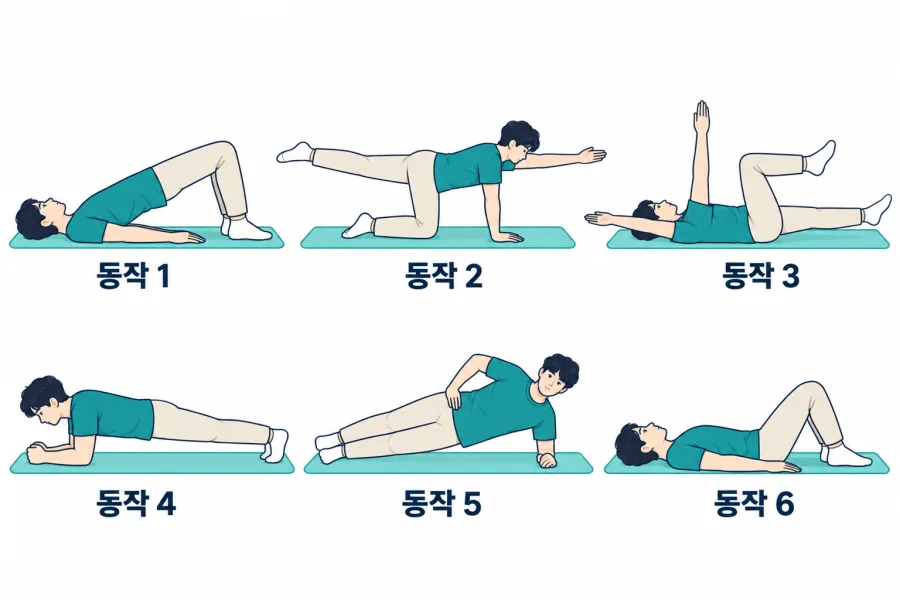 ▶ SpineTube | Strength training when you have a disc problem? ↗
- Stretching Exercises
The purpose of stretching exercises is to stretch the muscles and ligaments of the back. These exercises help relieve stiffness in the back and increase the range of motion of the lower back.
- Other Aerobic Exercises
Aerobic exercise strengthens heart function and breathing, enhancing cardiopulmonary fitness and promoting the body's metabolism. Aerobic exercise is typically recommended to be performed for at least 30 minutes at a time, at least three times per week to be effective. Examples of aerobic exercise include brisk walking, jogging, and swimming. However, some patients may find it difficult to exercise for 30 minutes or more at a time, and vigorous physical movement can injure the lower back. In particular, exercises such as running should be done with caution because they can place stress on the spinal discs.
▶ SpineTube | Why swimming is good exercise ↗3) Physical Therapy / Supportive Devices
One physical therapy method that was once widely used is traction therapy. Traction works by pulling the spine to widen the space between the vertebrae, allowing a bulging disc to move back inward and symptoms to ease. However, the effect is often only temporary, and there is no evidence that it works better than other conservative treatments, so it is rarely used today. Another method involves wearing supportive devices such as corsets or back braces. These devices limit lower back movement, support the abdomen, and help correct posture. However, such devices are effective only when used in limited situations, such as immediately after surgery. When used long-term for chronic low back pain, they can weaken back muscles and cause stiffness in the lower back joints, potentially leading to negative results. Therefore, caution is warranted.
4) Lifestyle Modification
Maintaining proper posture and techniques when lifting objects, sitting, and standing to avoid injuring the lower back is very important both for treating and preventing low back pain. In addition, appropriate exercise and rest, sufficient sleep, proper nutrition, and smoking cessation are all beneficial.
5) Medication
Various medications can be used to treat low back pain. Some of these can be purchased and used without a prescription at a pharmacy, while others require a doctor's prescription.
Pain relievers are medications used to reduce pain. They range from over-the-counter pain relievers such as aspirin and acetaminophen to narcotic pain medications. Muscle relaxants and antidepressants can also be used in the treatment of chronic low back pain.
6) Injection Therapy
If chronic low back pain is not treated by the above methods, injections containing local anesthetics and/or steroids can be administered into nerve roots or joints to block nerves or alleviate low back pain symptoms.
Medical review: Lumbar Spine Research Society · Provided by the Korean Society of Spine Surgery